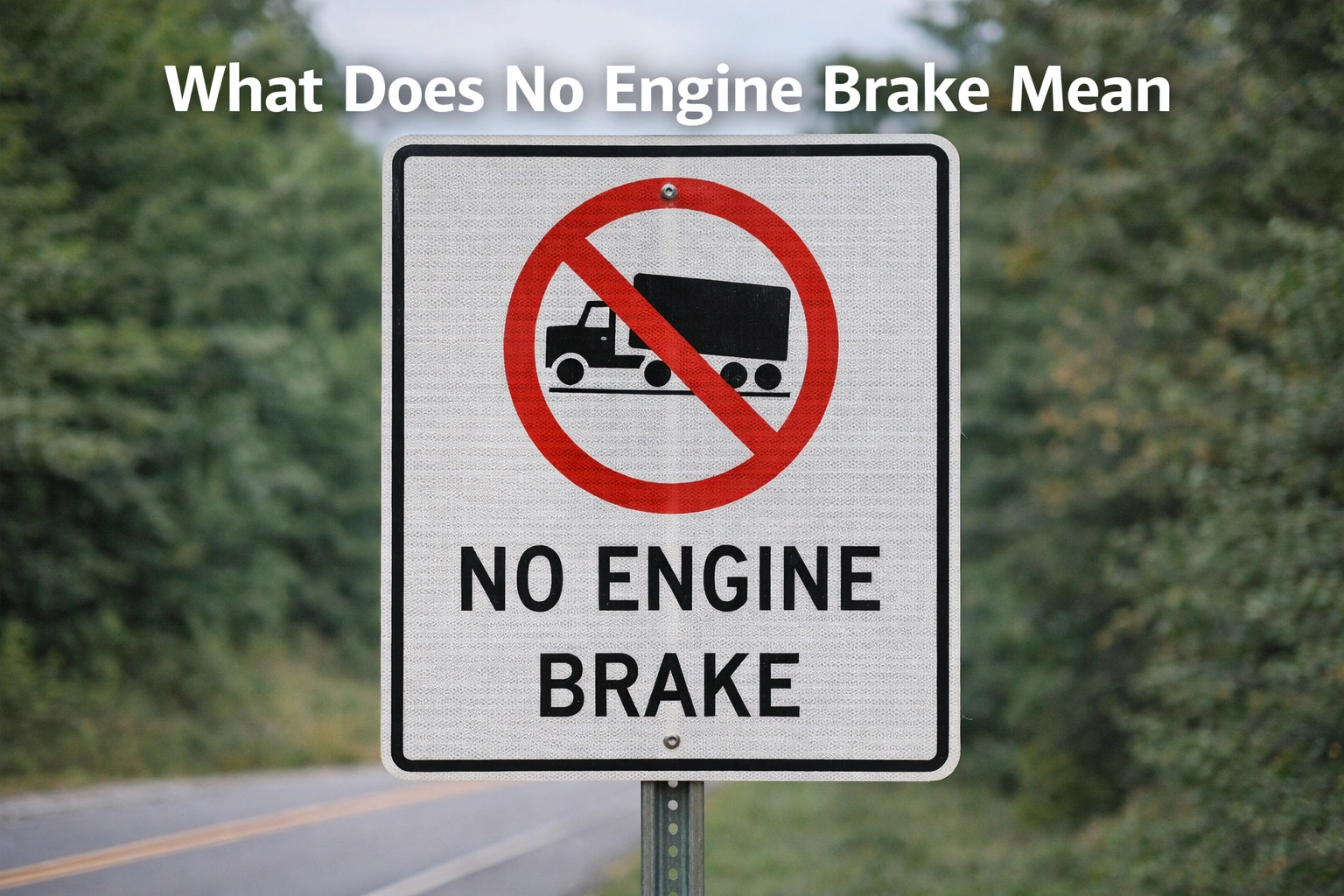
Road signs often communicate important rules designed to improve safety and reduce noise in certain areas. Among these signs, one that frequently appears near residential neighborhoods or urban zones reads “No Engine Brake.”
Many drivers, especially those unfamiliar with large trucks or diesel vehicles, find this message confusing. The sign does not refer to the standard brakes used to stop a vehicle. Instead, it relates to a specific braking technique commonly used by heavy trucks.
Engine braking is a method that slows a vehicle by using engine resistance rather than relying entirely on wheel brakes. Large trucks use specialized engine braking systems that create loud mechanical sounds during operation.
Because the noise can be disruptive in quiet areas, some roads restrict their use. These restrictions are usually indicated by signs stating that engine braking is not allowed. To interpret the meaning correctly, it helps to examine how engine braking works, why trucks rely on it, and why certain communities limit its use.
Meaning Of Engine Braking In Vehicles
How Engine Braking Slows A Vehicle
Engine braking occurs when a driver releases the accelerator while the vehicle remains in gear. Instead of allowing the vehicle to coast freely, the engine creates resistance that slows the wheels. This resistance happens because the engine continues turning while receiving little or no fuel input.
In manual transmission vehicles, engine braking becomes noticeable when the driver downshifts to a lower gear. The engine speed increases, and the vehicle slows naturally as mechanical resistance builds inside the drivetrain.
Vehicles such as the Ford Mustang and Subaru WRX demonstrate engine braking clearly when drivers shift into lower gears during deceleration.
This technique reduces reliance on the conventional braking system and helps maintain control when descending steep hills.
Engine braking is a natural result of how internal combustion engines operate when connected to the drivetrain.
Engine Brakes Used In Heavy Trucks
Large diesel trucks often use a specialized engine braking system commonly referred to as a compression release brake. This device modifies the normal engine cycle so that compressed air inside the engine cylinders is released before it can push the piston downward.
By releasing the compressed air, the engine absorbs energy instead of producing power. This effect slows the truck significantly without using the wheel brakes.
Vehicles such as the Freightliner Cascadia and Kenworth T680 frequently use this type of braking system.
The system produces a loud rattling sound that many people recognize when large trucks slow down on highways or steep hills.
Although effective for controlling speed, the noise generated by these systems can become disruptive in populated areas.
Why Some Roads Display No Engine Brake Signs
Noise Generated By Compression Release Brakes
Compression release engine brakes produce a distinctive loud sound when activated. This noise occurs because the system releases compressed air from the engine cylinders rapidly during each engine cycle.
When large trucks use this braking method, the sound may resemble a rapid series of mechanical bursts. In quiet areas such as residential neighborhoods or small towns, the noise can travel long distances and disturb nearby residents.
Vehicles like the Volvo VNL often use these braking systems during downhill travel.
To reduce noise pollution, local governments sometimes restrict the use of engine brakes within city limits.
Signs stating “No Engine Brake” remind truck drivers that the use of these systems is prohibited in those areas.
Protecting Residential And Urban Environments
Communities located near busy highways sometimes experience frequent truck traffic. The repeated noise from engine braking can disrupt sleep and create disturbances during nighttime hours.
Municipal authorities often install engine brake restriction signs to improve quality of life for residents. These signs typically appear near city entrances, residential districts, or areas with hospitals and schools.
Vehicles such as the Peterbilt 579 may pass through these zones regularly while transporting cargo across long distances.
By limiting the use of loud braking systems, communities maintain quieter surroundings without completely restricting truck traffic.
Drivers are expected to rely on conventional braking systems when traveling through these designated areas.
Difference Between Engine Braking And Traditional Brakes
Conventional Braking Systems
Traditional braking systems operate through friction created between brake pads and rotating brake discs or drums. When the brake pedal is pressed, hydraulic pressure pushes the pads against the disc surface.
This friction slows the rotation of the wheels and eventually stops the vehicle. Conventional brakes function quietly and provide strong stopping power under normal conditions.
Passenger vehicles such as the Toyota Camry rely primarily on this braking method.
Although effective, repeated braking during steep downhill travel can generate heat that reduces braking performance.
Engine braking helps reduce this heat buildup by sharing the workload with the drivetrain.
Advantages Of Engine Braking For Large Vehicles
Heavy trucks carry extremely large loads and require additional methods for controlling speed safely. Engine braking provides a way to slow the vehicle without overheating the wheel brakes.
When trucks descend long mountain grades, continuous braking can cause brake components to overheat and lose effectiveness. Engine braking prevents this problem by allowing the engine to absorb some of the energy.
Vehicles such as the Mack Anthem rely heavily on engine braking for safe downhill operation.
By combining engine braking with traditional brakes, truck drivers maintain better control and reduce mechanical wear.
Despite these benefits, the noise produced by these systems remains the primary reason some areas prohibit their use.
How Drivers Should Respond To No Engine Brake Signs
When drivers encounter a sign indicating that engine braking is prohibited, they should rely on conventional braking systems instead. Truck drivers are expected to avoid activating compression release brakes while traveling through restricted areas.
Maintaining a safe speed before entering these zones helps reduce the need for heavy braking. Gradual deceleration and proper gear selection allow drivers to control speed without producing excessive noise.
Vehicles such as the International LT Series can still slow effectively using standard braking techniques.
Following these restrictions ensures compliance with local regulations and helps maintain quieter communities.
Drivers who ignore these signs may face fines or other penalties depending on local enforcement policies.
The phrase “No Engine Brake” refers to a restriction on using loud compression release braking systems typically found in large diesel trucks. These systems provide powerful braking assistance but generate significant noise during operation.
Communities often place these signs near residential or urban areas to reduce noise pollution and maintain quieter surroundings. Drivers encountering these signs should rely on conventional braking systems rather than engine braking while traveling through restricted zones.